01 / GAME · INDEPENDENT BUILD
Economia
A city-builder game about developing a town, managing its resources, and understanding the effects of economic decisions.
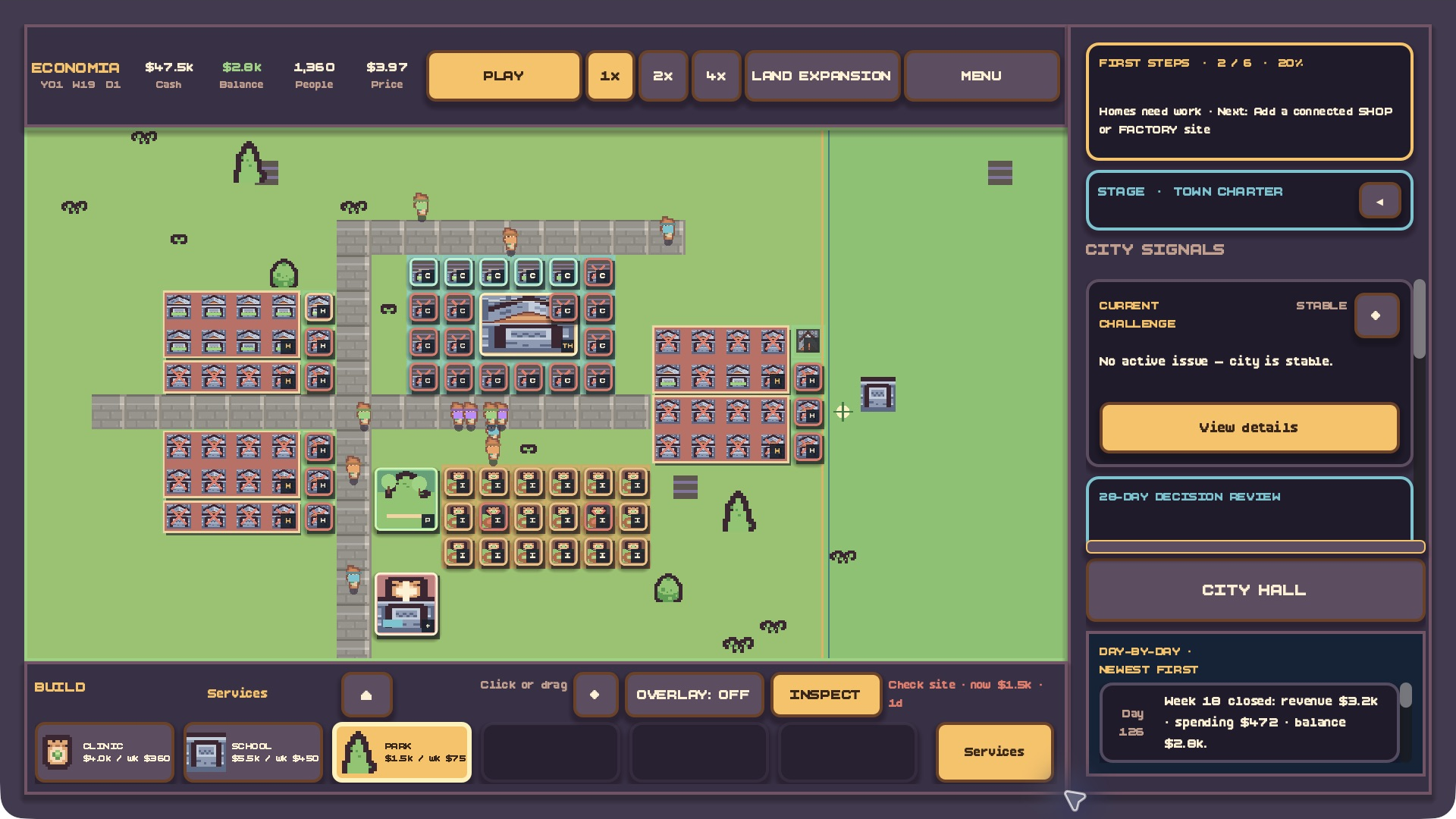
Screenshots show a local development build. Select any image to open its full-size PNG.
ABOUT THE PROJECT
Overview and playable game
Economia is a city-builder game I am developing to help people explore economics through play. Players take responsibility for a small town and decide where to build, how to use land, what services to provide, and how to pay for them. The city changes as households and businesses respond to those decisions.
The game is intended for people who enjoy city-building games and students beginning to study economics. It gives players a place to try different policies, observe their consequences, and revise their approach. Economia is built in Godot and remains in active development.
How the game works
Players balance the needs of residents and businesses against the resources available to the city. Housing, employment, goods, public services, and the city budget are connected, so improving one part of the town can create pressure elsewhere. New housing takes time to become available, while public services create costs that continue after construction.
The game gives players information to help them follow these changes. Before making a decision, they can examine its cost and expected effects. City signals highlight emerging problems, and later reviews summarize observed changes and competing contributors. The guided First Steps chapters introduce these decisions gradually; Open City allows players to continue developing their town.
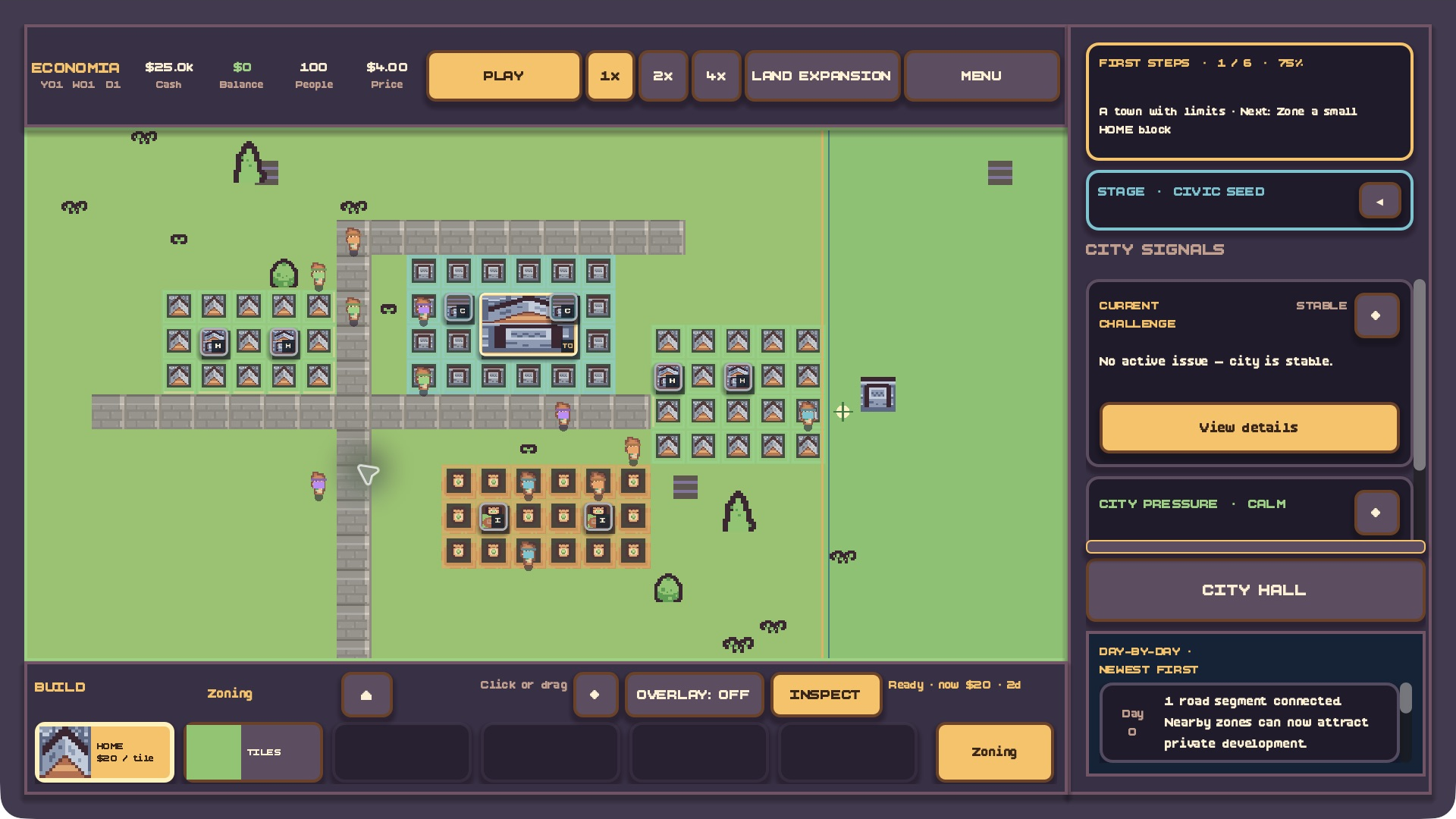
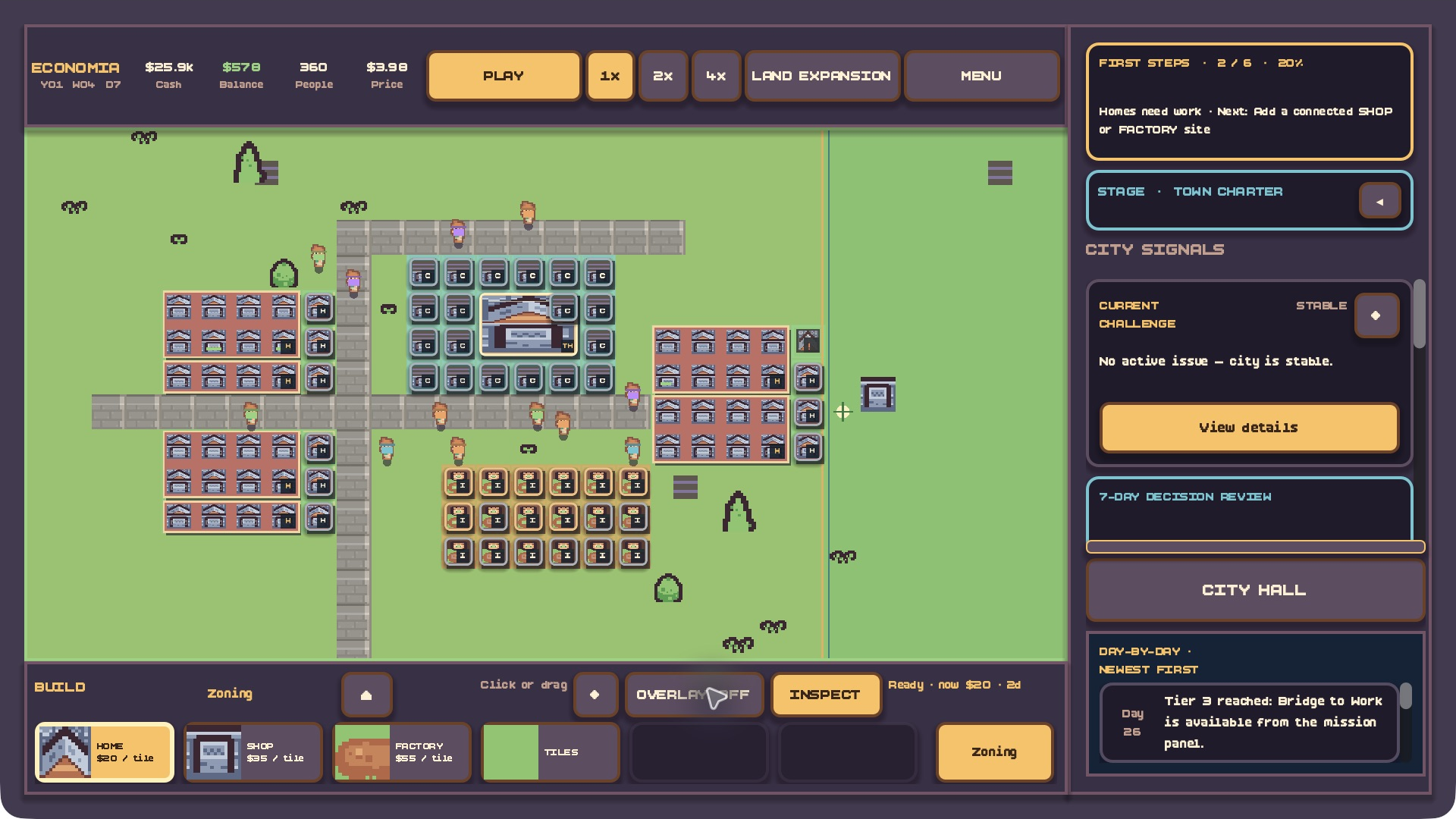
The two views are 27 game days apart, with the same camera position. Other conditions changed during that time, so the pair demonstrates delayed development rather than the isolated effect of housing alone. The HUD does not show a numeric rent value.
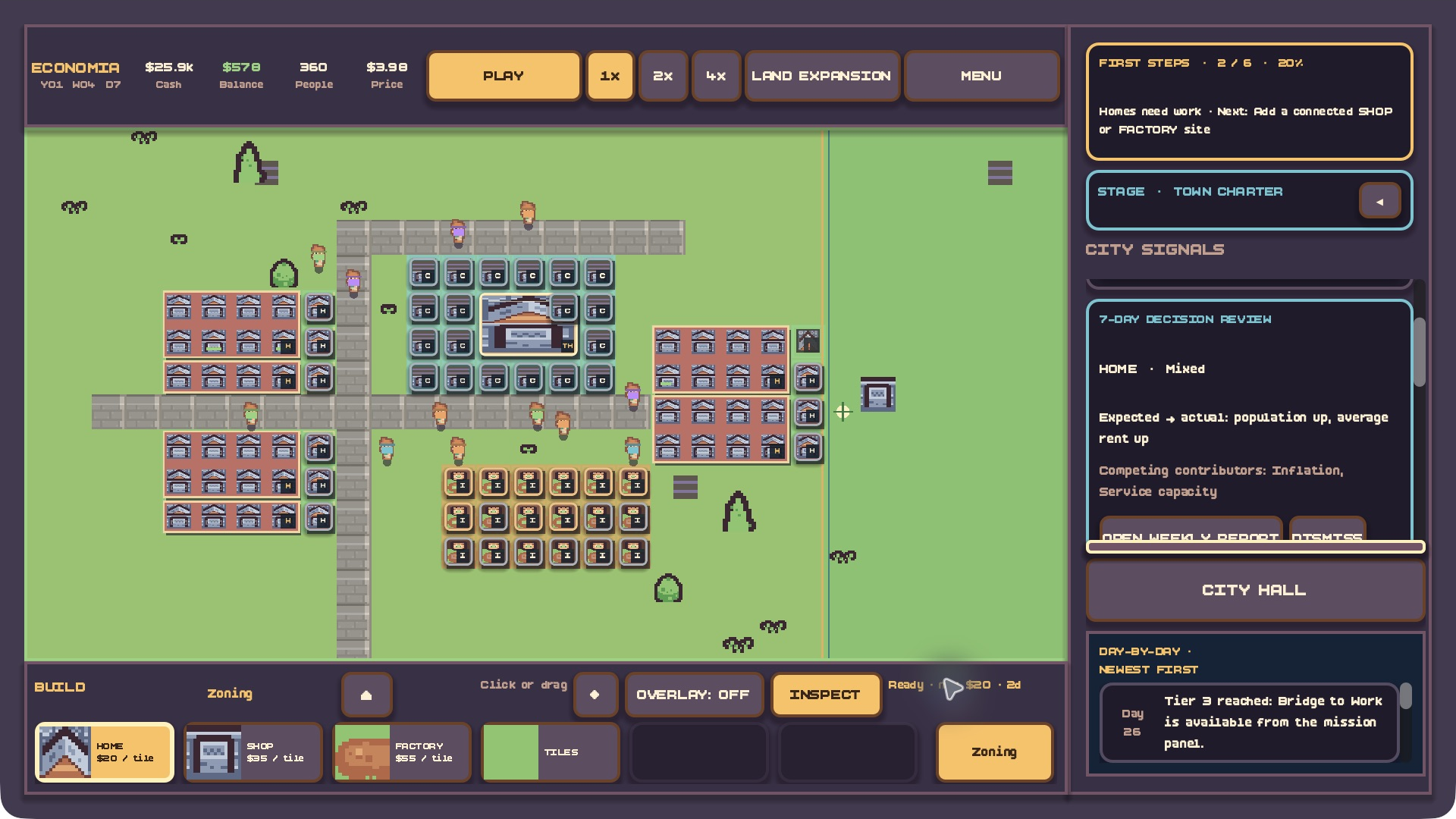
The seven-day review revisits a decision after the city has had time to respond. Here, population grew as predicted, but rent also rose despite a forecast decline, so the result was marked Mixed. The game flags inflation and service capacity as possible influences on that outcome. This screenshot was taken on day 27 and shows the day-7 review. The original forecast comes from the saved review record; the card itself shows the observed directions.
Development and my contribution
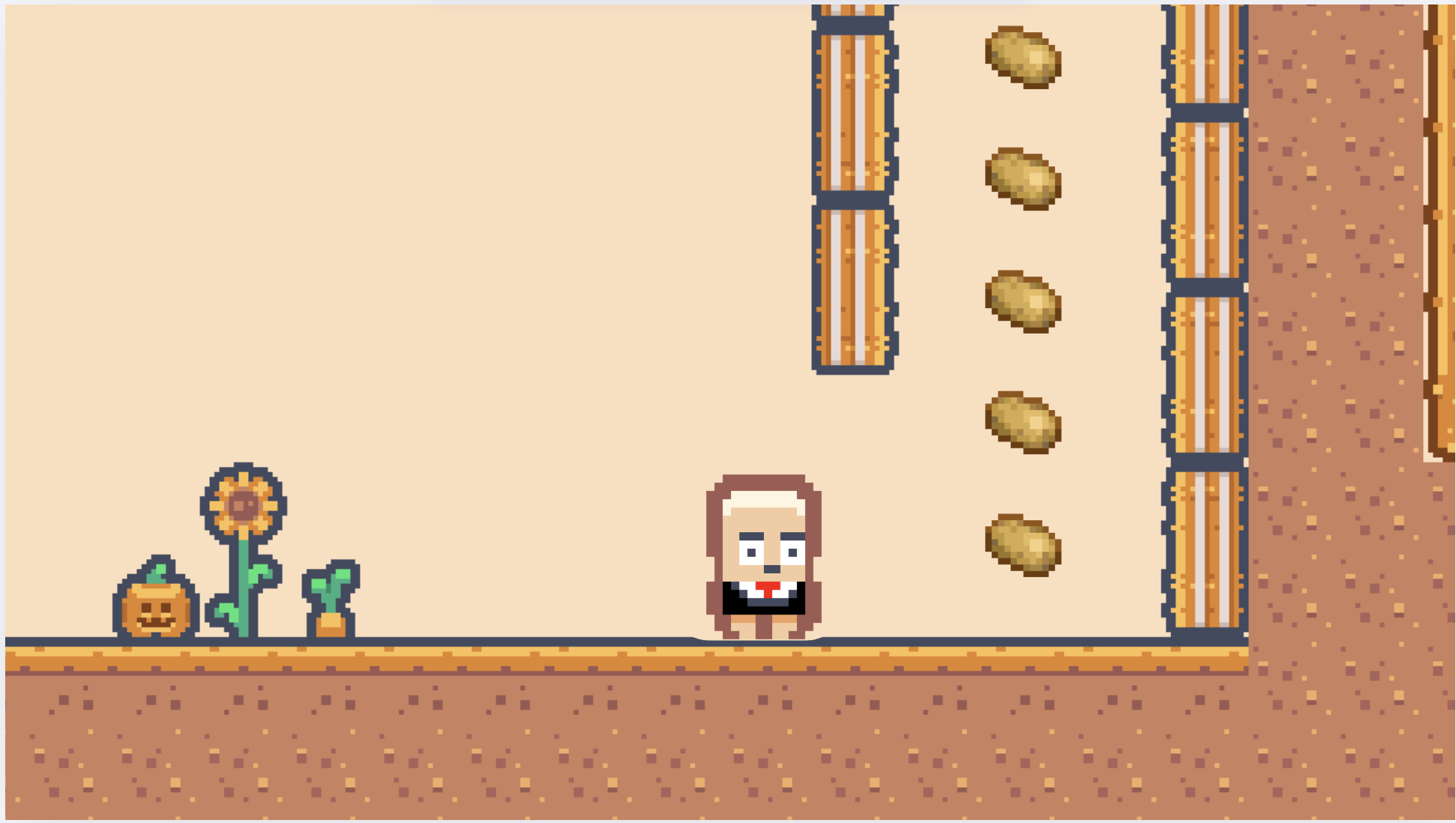
Economia began as my MYP personal project. The first version was a platformer incorporating economic ideas, but that format limited the decisions players could make. I restarted the project as a city-builder, keeping much of the visual direction while changing the structure of the game.
My work has included designing the economic rules, developing the game in Godot, and building the controls and reports players use to understand their city. I used AI coding tools during later development to help with implementation.
An important development challenge was making the effects of a decision understandable. Several systems can change at once, and the consequences may appear days after the original action. This led me to develop the guided chapters, action previews, and outcome reviews so that players could follow a decision beyond the moment they made it.
Testing and current progress
A playable build is available on itch.io, and testing has involved players beyond my friends and family. One useful observation was that players could build a city without being able to explain why it was succeeding or struggling. I changed the opening into a sequence of guided chapters, each built around an economic problem, a decision, and time to observe the result.
Current development focuses on helping players understand the information available to them and use it to make decisions. Testing so far has provided feedback on the experience of playing. I have not yet carried out a formal classroom study or a before-and-after assessment of economic understanding.
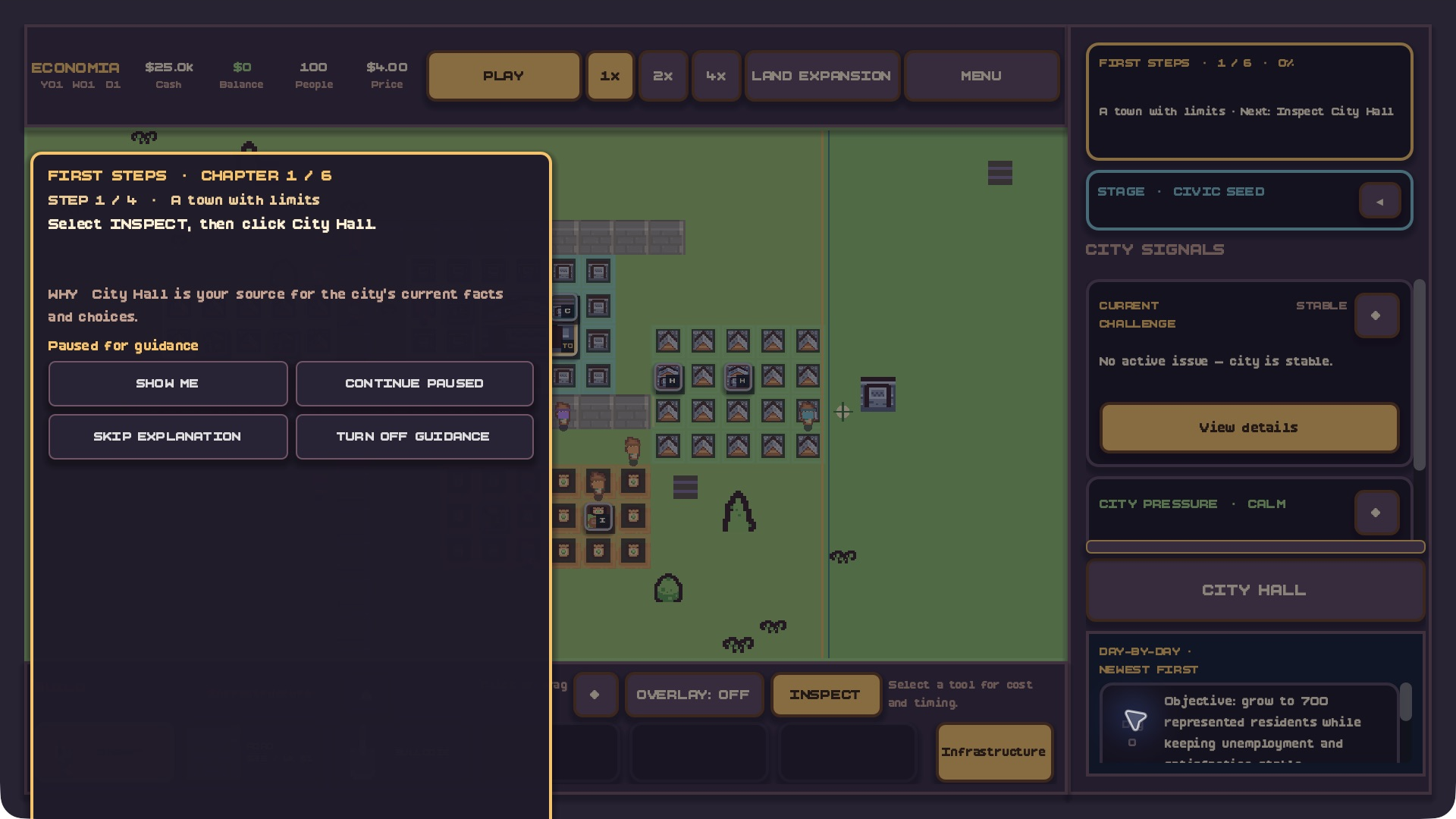
The image shows chapter 1, step 1 of 4. The guidance dimming and the card's partly off-screen lower area are retained as the game presented them.
Long-term goals
My long-term goal is to develop Economia into a game that students can use alongside their economics lessons. I want it to remain enjoyable as a city-builder while giving players enough information to explain the decisions they make and the effects they observe.
The next step is to test the guided experience with people who have little or no economics background. I want to check whether they can explain an outcome, compare alternatives, and apply that reasoning to a new situation. That feedback would guide changes to the instructions, reports, and difficulty.
Further ahead, I would like to work with teachers on short classroom activities built around particular problems, such as housing shortages or a strained public budget. A small pilot would help establish how the game fits within a lesson and what students understand afterward.
Supporting work
Play Economia on itch.io for the current build and available downloads. The development log records work on the project.
The original MYP personal project report documents the earlier platformer version and its development. It provides background on the project’s beginnings, rather than documentation of the current city-builder.